Beyond the Narrative: Where Mental Health Myths, Trends & Truths Collide
By Nitin Shah
CEO, ICHARS & Director, ICHARS Support Foundation
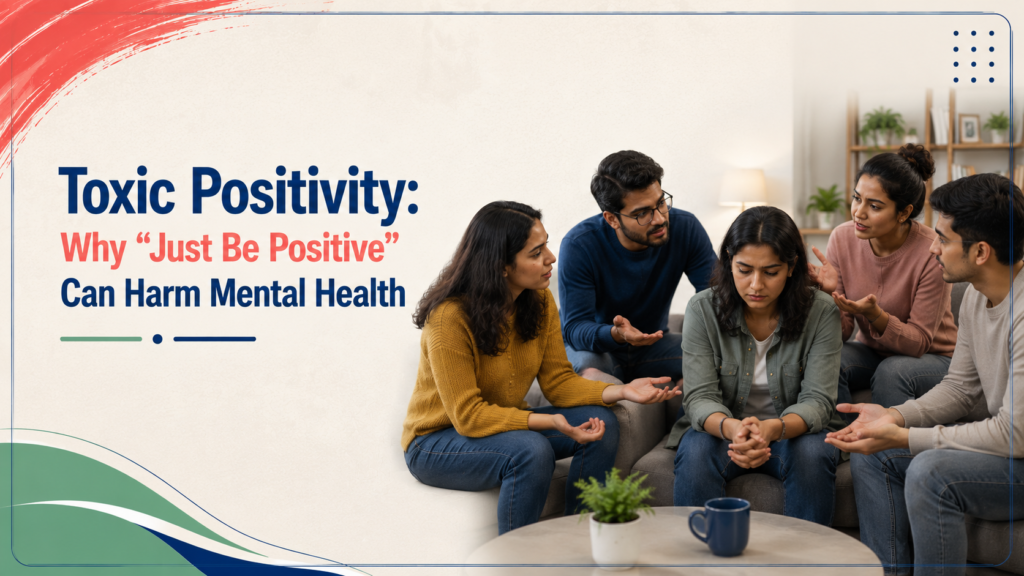
Have You Ever Been Told, “Just Stay Positive”?
Imagine sharing something deeply personal with someone you trust.
Perhaps you are overwhelmed by work.
Struggling academically.
Coping with grief.
Feeling emotionally exhausted.
You finally decide to speak about what you are experiencing.
Instead of being asked what you need, you hear:
“Just stay positive.”
“Everything happens for a reason.”
“Don’t overthink it.”
“Focus on the bright side.”
Most of these responses come from a place of care.
People genuinely want to help.
They want to reduce distress, offer encouragement, and remind others that difficult situations can improve.
There is kindness behind the intention.
Yet many people leave these conversations feeling unexpectedly alone.
Not because hope is harmful.
But because they feel their emotional experience has been overlooked.
This is where an important conversation begins.
The issue is not positivity itself.
The issue is what happens when positivity becomes the only acceptable emotional response.
When people begin feeling that they must appear okay rather than honestly express what they are experiencing, emotional wellbeing often becomes more difficult to protect.
This conversation is therefore about far more than individual emotions.
It influences families.
Educational institutions.
Workplaces.
Leadership.
Communities.
Ultimately, it shapes the kinds of environments we create for one another.
What Is Toxic Positivity?
Toxic positivity is the belief that people should maintain a positive mindset regardless of how difficult or painful a situation may be, often leading to the dismissal or invalidation of genuine emotional experiences.
It is important to recognise that toxic positivity and mental health are not opposing ideas because positivity itself is harmful.
They become connected when encouragement unintentionally replaces understanding.
Hope, optimism, and resilience remain valuable.
However, they are most helpful when they acknowledge reality rather than ignore it.
Healthy emotional wellbeing allows people to experience a full range of emotions—including joy, sadness, frustration, fear, disappointment, uncertainty, and hope—without feeling pressured to suppress or hide them.
Understanding toxic positivity through this broader perspective shifts the conversation away from simply “thinking positively” and towards creating emotionally healthier environments where honesty and hope can coexist.
Toxic Positivity vs Healthy Optimism: What’s the Difference?
One of the biggest misconceptions about toxic positivity is that it is somehow an argument against optimism.
It is not.
The issue is not positivity itself.
The issue is how positivity is interpreted and applied.
Healthy optimism acknowledges reality while maintaining hope.
Toxic positivity often attempts to replace reality with positivity.
Consider a student feeling overwhelmed by academic pressure.
If the immediate response is,
“Just stay positive,”
the intention may be supportive.
However, the message can unintentionally communicate that the emotional experience itself is less important than maintaining a positive attitude.
The same dynamic can appear in workplaces.
An employee experiencing burnout may be encouraged to focus only on the positive aspects of their role.
While optimism may provide temporary encouragement, it does not address the underlying causes of stress, workload pressures, or emotional exhaustion.
In both situations, positivity becomes a substitute for understanding.
And when understanding is replaced by quick reassurance, opportunities for meaningful support are often lost.
Why Emotional Validation Matters
One of the most effective ways to counter toxic positivity is through emotional validation.
Emotional validation does not mean agreeing with every thought or emotion someone experiences.
Nor does it mean encouraging people to remain stuck in distress.
Instead, emotional validation means acknowledging that another person’s emotional experience is real, understandable, and worthy of being heard.
Sometimes the most supportive response is not offering advice.
It is listening.
It is asking thoughtful questions.
It is creating space for someone to express difficult emotions without immediately trying to change how they feel.
Ironically, people often become more capable of moving forward after they feel understood.
Acknowledging emotions does not weaken resilience.
It strengthens it.
People cannot effectively process experiences they are not allowed to recognise.
Emotional honesty therefore becomes one of the foundations of emotional resilience.
This is why the conversation around toxic positivity and mental health is not about choosing between optimism and vulnerability.
It is about creating environments where both can coexist.
When Encouragement Becomes Emotional Invalidation
Many of us have grown up hearing phrases such as:
- “Don’t overthink.”
- “Move on.”
- “Be strong.”
- “Others have it worse.”
- “Focus on the positive.”
Most of these statements come from a place of care.
People rarely intend to dismiss someone’s emotional experience.
However, good intentions do not always create helpful outcomes.
One reason these responses persist is that many people were never taught how to engage with difficult emotions themselves.
When they encounter emotional distress in others, their instinct is often to remove discomfort as quickly as possible.
There is also a widespread misconception that acknowledging difficult emotions makes people weaker or less resilient.
In reality, the opposite is often true.
People cannot effectively navigate experiences they refuse to acknowledge.
Emotional awareness is not the opposite of resilience.
It is often one of its foundations.
When difficult emotions are repeatedly dismissed, people may begin questioning whether their feelings are appropriate to express at all.
Over time, this can reduce emotional honesty and discourage help-seeking behaviour.
Rather than disappearing, emotions frequently re-emerge in different ways, including:
- Chronic stress
- Burnout
- Emotional exhaustion
- Interpersonal conflict
- Withdrawal from relationships
- Reduced engagement
- Difficulty concentrating
This is one of the reasons toxic positivity and mental health are so closely connected.
The issue is rarely the emotion itself.
The issue is whether people feel safe enough to acknowledge it before it begins affecting other areas of life.
The Rise of Emotional Performance
One of the most concerning consequences of toxic positivity is the pressure it creates to perform wellbeing.
Many people learn to appear fine long before they learn how to process what they are genuinely experiencing.
A student may continue attending classes, submitting assignments, and meeting academic expectations while feeling overwhelmed internally.
An employee may consistently achieve targets while quietly experiencing emotional exhaustion.
A volunteer supporting vulnerable communities may continue helping others every day while gradually becoming emotionally depleted.
A leader may appear calm, resilient, and confident while carrying significant psychological strain.
From the outside, everything appears normal.
Performance continues.
Responsibilities are fulfilled.
Expectations are met.
Yet internally, the experience may be very different.
This creates an important challenge for educational institutions, workplaces, and community organisations.
Visible performance does not always reflect emotional wellbeing.
People can be:
- Successful and struggling.
- Productive and overwhelmed.
- Highly engaged in appearance but emotionally disconnected.
When institutions rely only on visible outcomes, emotional challenges often remain hidden until they become significantly more difficult to address.
Creating psychologically safe environments means recognising that wellbeing cannot always be measured through performance alone.

What Institutions Frequently Miss About Toxic Positivity and Mental Health
One of the biggest misconceptions surrounding toxic positivity is that emotional distress always looks emotional.
In reality, emotional struggles often appear through behavioural changes rather than direct disclosures.
Within educational institutions, students may:
- Become quieter during discussions.
- Participate less actively.
- Struggle with concentration.
- Delay assignments.
- Become increasingly perfectionistic.
- Attend classes inconsistently.
Within workplaces, employees may begin experiencing:
- Reduced enthusiasm.
- Emotional disengagement.
- Lower creativity.
- Communication difficulties.
- Increased cynicism.
- Withdrawal from colleagues.
Community workers and volunteers may continue supporting others while quietly carrying emotional fatigue themselves.
The challenge is that institutions frequently wait for visible crises before responding.
By the time someone openly communicates distress, emotional challenges may have been developing for weeks or even months.
This is why early intervention matters.
Silence should not automatically be interpreted as wellbeing.
Nor should performance, attendance, or productivity.
These are important indicators, but they do not always reflect someone’s emotional wellbeing.
Sometimes silence reflects comfort.
Sometimes it reflects fear.
Sometimes it reflects the belief that expressing difficult emotions will be misunderstood or dismissed.
Creating emotionally healthier environments therefore requires looking beyond visible outcomes and becoming more attentive to the human experiences behind them.
Building Psychologically Safe Cultures Where Hope and Honesty Can Coexist
If toxic positivity discourages emotional honesty, the solution is not to eliminate positivity.
The solution is to create environments where hope and honesty can coexist.
This begins with psychological safety.
Psychological safety is the shared belief that people can express concerns, ask questions, acknowledge uncertainty, discuss mistakes, or seek support without fear of judgement, embarrassment, or negative consequences.
In educational institutions, this means creating opportunities for students to speak openly about stress, failure, uncertainty, and emotional wellbeing.
In workplaces, it means ensuring employees do not fear professional consequences for discussing challenges or seeking support.
Within NGOs and community organisations, it means recognising that those who help others also need emotionally supportive environments themselves.
Increasingly, successful institutions recognise that wellbeing is not created through isolated awareness campaigns.
It is built through systems.
Through leadership.
Through culture.
Through everyday conversations.
Mental health awareness creates visibility.
Psychological safety creates action.
When people trust they will be met with understanding rather than judgement, emotional honesty becomes easier.
And when emotional honesty becomes part of everyday culture, organisations, educational institutions, and communities become healthier, more resilient, and better equipped to support the people they serve.

A Collective Responsibility: Moving Beyond Awareness
Mental health is often described as a personal responsibility.
Yet the environments in which people live, learn, work, and lead have a profound influence on emotional wellbeing.
Educational institutions shape whether students feel safe asking for support.
Workplaces influence whether employees feel comfortable discussing challenges before they escalate into burnout.
Community organisations determine whether people experience connection, understanding, and belonging.
Leadership shapes whether emotional honesty is encouraged or quietly discouraged.
This is why toxic positivity and mental health cannot be understood only at the individual level.
They are also shaped by culture.
By systems.
By everyday interactions.
When institutions unintentionally reward people for appearing okay rather than being honest, they risk creating environments where emotional struggles remain hidden until they become crises.
Conversely, when institutions promote emotional validation alongside accountability, people are more likely to seek help early, support one another, and contribute more effectively to their communities.
Creating emotionally healthy cultures is therefore not simply about encouraging positivity.
It is about ensuring people never have to choose between appearing resilient and being authentic.
From Awareness to Action: Building Systems That Support Emotional Wellbeing
Mental health awareness has grown significantly over the past decade.
Campaigns have increased visibility.
Training programmes have improved knowledge.
Conversations have become more common.
These developments represent important progress.
However, awareness alone does not automatically create emotionally healthier environments.
Sustainable change occurs when emotional wellbeing becomes embedded within everyday systems rather than remaining limited to occasional awareness initiatives.
Educational institutions can integrate emotional wellbeing into student development, educator training, and campus culture.
Organisations can embed workplace mental health into leadership development, employee wellbeing strategies, performance conversations, and organisational policies.
Community organisations and NGOs can strengthen peer support networks, improve access to professional resources, and encourage emotionally healthy communication practices.
The question therefore shifts from:
“How do we encourage people to think positively?”
to
“How do we create environments where people feel safe enough to be emotionally honest?”
When emotional honesty becomes part of organisational culture, psychological safety becomes stronger.
When psychological safety becomes stronger, early help-seeking becomes more likely.
And when support is sought earlier, individuals, institutions, and communities become more resilient.
Turning Awareness into Action
At ICHARS Support Foundation (ISF), we believe awareness is only the beginning.
Meaningful change happens when awareness is translated into consistent action.
Through Project Soch, the Foundation works to challenge common mental health myths—including the belief that people should simply “stay positive” regardless of what they are experiencing.
Instead, Project Soch encourages emotionally informed conversations that recognise the importance of emotional validation, psychological safety, and evidence-informed mental health awareness.
Alongside Project Soch, the Foundation partners with educational institutions, workplaces, NGOs, and communities through workshops, capacity-building initiatives, leadership development programmes, and community engagement efforts that strengthen mental health literacy and create emotionally healthier environments.
The objective is not simply to encourage conversations about mental health.
It is to build systems where those conversations can safely happen.
Because awareness creates visibility.
But supportive systems create lasting change.
A Question Worth Asking
As conversations around toxic positivity continue to grow, perhaps the most important question is no longer whether positivity is good or bad.
A more meaningful question is:
Are we creating environments where people feel safe enough to be honest about what they are experiencing?
Ask yourself:
- Do people feel heard before they are advised?
- Do students and employees feel safe expressing emotional challenges?
- Are leaders equipped to respond with emotional validation rather than quick reassurance?
- Do our institutions encourage honest conversations as much as positive thinking?
- Are we building psychologically safe cultures where hope and honesty can coexist?
The answers to these questions often reveal where meaningful change begins.
Because emotional wellbeing is not created by avoiding difficult emotions.
It is created by recognising them, understanding them, and responding to them with empathy, wisdom, and appropriate support.
The goal has never been to choose between optimism and vulnerability.
The goal is to create cultures where both can exist together.
That is where healthier people, stronger institutions, and more resilient communities begin.
Frequently Asked Questions (FAQs)
1. What is toxic positivity?
Toxic positivity is the belief that people should remain positive regardless of how difficult a situation may be. While usually well-intentioned, it can unintentionally dismiss or invalidate genuine emotional experiences.
2. Why can saying “just be positive” be harmful?
Although the intention is often supportive, phrases such as “just be positive” may make people feel that their emotions are unacceptable or should be ignored. This can discourage emotional honesty and delay help-seeking.
3. What is emotional validation?
Emotional validation means acknowledging that another person’s emotional experience is real and worthy of understanding. It does not mean agreeing with every emotion—it means creating space for people to feel heard before offering advice or solutions.
4. What is the difference between healthy optimism and toxic positivity?
Healthy optimism recognises challenges while maintaining hope. Toxic positivity attempts to replace or suppress difficult emotions with positive thinking, often overlooking what someone is genuinely experiencing.
5. How can leaders avoid toxic positivity?
Leaders can avoid toxic positivity by listening without judgement, encouraging honest conversations, creating psychologically safe environments, responding with empathy, and ensuring employees or students feel comfortable seeking support when needed.
References
- World Health Organization (WHO). Mental Health. WHO recognises mental health as an integral part of overall health and wellbeing and emphasises the importance of prevention, supportive environments, and early intervention.
- World Health Organization (WHO). Mental Health at Work. WHO highlights that psychologically healthy workplaces improve employee wellbeing while strengthening organisational performance and productivity.
- Amy C. Edmondson. The Fearless Organization. Edmondson’s work on psychological safety demonstrates how environments where people feel safe to speak up encourage learning, collaboration, help-seeking, and healthier organisational cultures.
Learn More
To learn more about the work of ICHARS Support Foundation, explore our initiatives in mental health awareness, capacity building, institutional partnerships, and community engagement.
Together, we can move beyond oversimplified advice and create environments where emotional honesty, psychological safety, and meaningful support become part of everyday life.
Explore More from Beyond the Narrative
Continue exploring evidence-informed perspectives on mental health, emotional wellbeing, and the systems that shape our lives.