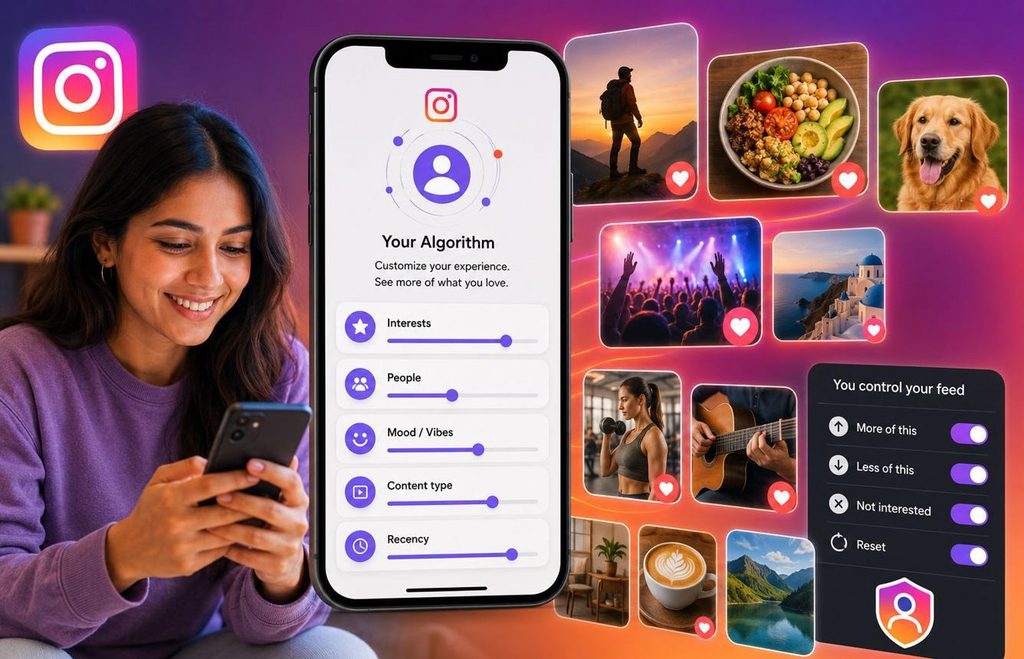
Who Shapes Your Opinions? The Psychology Behind Social Media Algorithms
Beyond the Narrative: Where Mental Health Myths, Trends & Truth Collide
Episode 04
By Nitin Shah, CEO, ICHARS & Director, ICHARS Support Foundation
Two People Can Use the Same Platform and See Completely Different Worlds
Have you ever noticed that two people can use the same social media platform and somehow experience completely different versions of it?
One person’s feed may be filled with political commentary.
Another may see fitness content.
Someone else may see mental health advice, entertainment, business content, or motivational videos.
Yet all of them are using the same platform.
This raises an interesting question:
If we are not all seeing the same digital environment, how much of what we believe is being shaped by the information repeatedly placed in front of us?
Social media is no longer simply a place for entertainment.
It has become a major environment for information, identity, opinions, social interaction, and conversations around mental health.
That makes understanding the psychology behind these platforms increasingly important.
The question is not whether algorithms control our minds.
That would be an oversimplification.
The more useful question is:
How do algorithms and human psychology interact to influence what we notice, engage with, and repeatedly encounter?
What Does a Social Media Algorithm Actually Do?
The word algorithm can sound highly technical.
In simple terms, social media algorithms are systems designed to determine what content is more likely to be shown to a particular user.
They use signals from user behaviour to personalise the experience.
What do you watch?
What do you click?
What do you search for?
What do you like?
What do you comment on?
How long do you spend viewing something?
These behaviours provide information about what appears relevant or engaging to you.
The important point is that an algorithm does not need to have an opinion of its own to influence your digital environment.
It responds to behavioural signals.
This creates a continuous feedback loop.
We interact with content → our behaviour creates signals → the system uses those signals → we receive more personalised content → we interact again.
The technology and the psychology therefore cannot be completely separated.
Human behaviour helps shape what the algorithm learns about us, while the resulting recommendations shape what we encounter next.
Why Does the Algorithm Keep Showing Us Similar Content?
Human attention is not random.
We naturally notice things that are emotionally meaningful, personally relevant, novel, or surprising.
If a particular type of content repeatedly captures our attention, our behaviour can communicate that interest to the platform.
The platform may then recommend more content with similar characteristics.
For example, imagine someone watches several videos about workplace burnout.
The platform may begin showing more videos about stress, productivity, mental health, workplace culture, and related subjects.
Similarly, someone who repeatedly watches content supporting a particular viewpoint may begin encountering increasingly similar perspectives.
The result is not necessarily deliberate manipulation.
It can emerge from a feedback loop between what interests us and what the system learns about our interests.
This is why blaming the algorithm alone gives an incomplete picture.
Our own psychological tendencies are part of the process.
Why Two People Can Experience Completely Different Digital Realities
Two people can search for the same topic and still walk away with very different online experiences.
Their previous behaviour matters.
Their interests matter.
Their interactions matter.
Their viewing patterns matter.
Their searches matter.
Over time, these signals contribute to increasingly personalised digital environments.
This means that what feels like the internet to one person may be completely different from what another person experiences.
One person may think:
“Everyone is talking about this.”
But what they may actually mean is:
“Everyone in the digital environment I am repeatedly shown is talking about this.”
That distinction is important.
Our feeds are not necessarily representative samples of reality.
They are personalised environments.
And when people spend substantial amounts of time inside those environments, it becomes increasingly important to remember that exposure is not the same thing as reality.
When Repetition Starts Shaping Our Thinking
Seeing something once does not necessarily change what we believe.
But repeated exposure can change how familiar something feels.
And familiarity matters.
When an idea appears repeatedly, it can begin to feel less unusual.
Something that initially seemed surprising may gradually become familiar.
Something that initially appeared to be one person’s opinion may eventually feel like a widely accepted position.
This does not mean repetition automatically makes an idea true.
It means that repeated exposure can influence how familiar and psychologically available an idea becomes.
This is particularly important on platforms where users can encounter variations of the same message many times without necessarily realising how frequently they are being exposed to it.
Familiarity Is Not the Same as Truth
One of the biggest challenges of personalised information environments is that they can make our own experience feel representative.
Suppose someone repeatedly sees posts claiming that a particular behaviour is extremely common.
After seeing the same message again and again, they may begin thinking:
“Everyone does this.”
But their feed may simply be showing them more of the same content because of their previous engagement.
The digital environment creates an impression of frequency.
That impression may not accurately represent the broader population.
This is why a useful question to ask when consuming online information is:
“Am I seeing this because it is genuinely widespread, or because this content is particularly relevant to my feed?”
That small pause can create space for more deliberate thinking.
What Is an Echo Chamber?
An echo chamber is an environment where similar opinions and viewpoints repeatedly reinforce one another while alternative perspectives become less visible.
Social media can contribute to these environments, particularly when people repeatedly engage with content that confirms what they already believe.
Over time, the same ideas can circulate among people who largely agree with one another.
The problem is not simply disagreement disappearing.
It is that people may gradually lose awareness of how much disagreement exists outside their digital environment.
Someone may therefore begin believing:
“Everyone thinks this way.”
When, in reality, their online environment is simply highly concentrated around one perspective.
An echo chamber does not necessarily mean that every opinion inside it is wrong.
The concern is that limited exposure can make critical evaluation more difficult.
Confirmation Bias Was Already Human
Social media did not invent confirmation bias.
Humans have long had a tendency to notice, interpret, and remember information in ways that can support existing beliefs.
If we already believe something, information supporting that belief may feel immediately convincing.
Contradictory information may require more scrutiny.
Digital platforms can accelerate this tendency because they provide an enormous amount of information that can reinforce existing viewpoints.
The cycle can become:
Existing belief → selective attention → engagement → similar recommendations → increased exposure → stronger confidence.
This is one reason critical thinking matters.
The goal is not to distrust everything we see.
It is to recognise that agreement can feel persuasive even when we have not adequately examined the evidence.
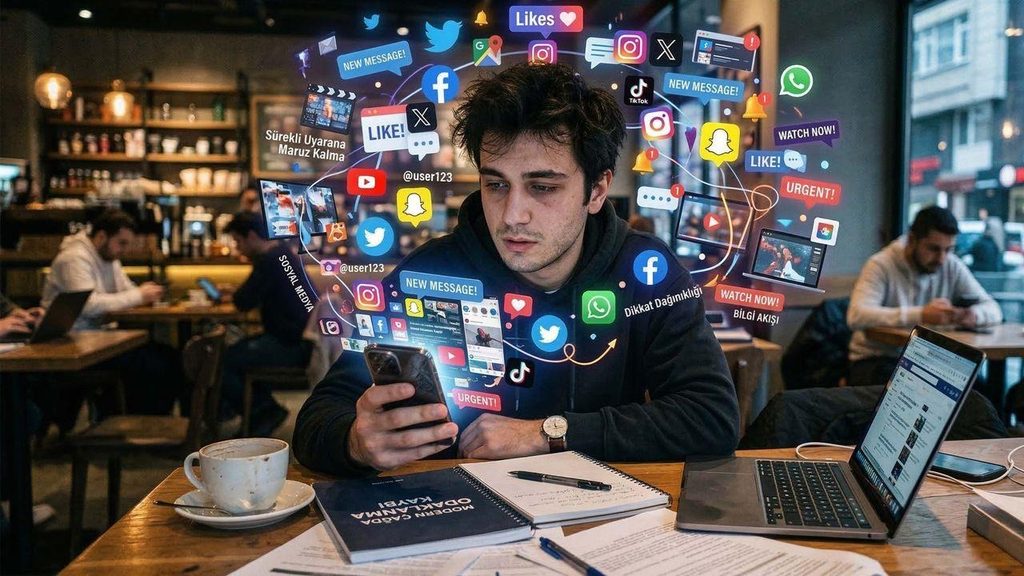
Mental Health Content: Awareness and Oversimplification Can Exist Together
Social media has also changed how people encounter mental health information.
Psychological concepts that were once discussed primarily in classrooms, clinics, books, or professional settings are now widely discussed online.
This has created genuine opportunities.
People can discover information.
They can encounter conversations that reduce stigma.
They can find communities where they feel less alone.
They can learn that seeking psychological support is possible.
But accessibility creates another challenge.
Complex psychological concepts can easily become simplified into short videos, captions, memes, or lists.
A nuanced clinical concept may be reduced to a few characteristics.
A normal emotional experience may be presented as evidence of a disorder.
A clinical term may become a casual label.
This matters because mental health education should increase understanding, not simply increase the number of psychological words people use.
When Mental Health Language Becomes Too Casual
Words such as trauma, OCD, ADHD, and narcissist have become common in everyday online conversations.
But clinical terminology has specific meanings.
Feeling uncomfortable about disorder does not automatically mean someone has OCD.
Being distracted occasionally does not automatically establish ADHD.
Having a difficult experience does not automatically mean someone has experienced psychological trauma in the clinical sense.
And disagreeing with or being hurt by someone does not automatically make that person a narcissist.
Using clinical language casually can blur the distinction between ordinary human experiences and clinically significant conditions.
This does not mean people should stop discussing mental health.
It means conversations should become more accurate as they become more accessible.
Can We Completely Avoid Algorithmic Influence?
Probably not—and complete avoidance is not necessarily the goal.
Every environment influences what we notice.
A classroom influences what students learn.
A workplace influences what employees pay attention to.
Our social circles influence what we discuss.
A news source influences which stories we encounter.
Digital platforms are another environment.
The more useful goal is therefore not complete avoidance.
It is awareness.
When we understand that our feeds are personalised, we become less likely to assume that our digital experience represents the entire world.
That awareness creates room for a more intentional approach.
Pause Before You React
One of the simplest habits we can develop is also one of the most useful:
Pause before reacting.
An emotionally charged post can create an immediate response.
Anger encourages sharing.
Fear encourages attention.
Surprise encourages engagement.
Before responding, consider asking:
What exactly am I reacting to?
What evidence supports this claim?
Have I seen another perspective?
Am I responding to the information—or to the emotion it created?
These questions do not guarantee perfect decisions.
They simply create a small gap between exposure and reaction.
And that gap matters.
Curiosity Is More Useful Than Certainty
Digital environments reward quick reactions.
Psychological reflection often requires the opposite.
Instead of immediately deciding:
“This is definitely true.”
We can ask:
“What else could explain this?”
Instead of:
“Everyone believes this.”
Ask:
“Who am I actually seeing?”
Instead of:
“This proves my point.”
Ask:
“What information would challenge my interpretation?”
Curiosity does not mean refusing to form conclusions.
It means allowing conclusions to develop after examination rather than immediately after exposure.

Digital Literacy Means Understanding How Information Reaches Us
Digital literacy is often understood as the ability to use technology.
But it needs to go further.
A digitally literate person should also understand something about how information reaches them.
Why am I seeing this?
Why is this content appearing repeatedly?
Who created it?
What evidence supports it?
What perspective is missing?
What does the platform gain from my engagement?
These questions do not require technical expertise.
They require awareness.
Digital literacy therefore intersects with critical thinking.
Knowing how to operate a platform is one skill.
Understanding how that platform can shape exposure and attention is another.
Parents and Educators Have an Important Role
Young people do not need adults to simply tell them what to think.
They need environments where they can learn how to think critically.
Parents and educators can encourage conversations around:
- how social media recommendations work,
- why emotionally charged content attracts attention,
- how confirmation bias operates,
- why online popularity does not automatically equal accuracy,
- and why different people can experience completely different digital environments.
The goal should not be to create fear around social media.
It should be to develop awareness.
A young person who understands their digital environment is better positioned to question it thoughtfully.
Institutions Also Have a Role in Digital Wellbeing
Digital wellbeing is not solely an individual’s responsibility.
Educational institutions, workplaces, parents, educators, and mental health professionals all influence how people understand and navigate digital environments.
Institutions can create spaces where people are encouraged to question information rather than passively consume it.
They can promote media literacy.
They can encourage respectful disagreement.
They can teach people to distinguish psychological concepts from social-media labels.
And they can create environments where asking questions is not treated as a sign of ignorance.
The objective is not to eliminate influence.
That is unrealistic.
The objective is to help people become more conscious of it.
A Healthy Digital Mind Is Not One That Sees Nothing
The answer is not to stop using social media.
Nor is it to distrust every recommendation.
The healthier approach is to recognise that our digital environment is selective.
We can consume information while remembering that we are seeing a particular version of it.
We can engage with opinions without assuming that exposure equals truth.
We can learn about mental health without turning every psychological concept into a diagnosis.
And we can remain open to information that challenges what we already believe.
A healthy digital mind is therefore not one that avoids influence completely.
It is one that remains curious enough to recognise when influence may be occurring.

Making Our Digital Habits More Intentional
We cannot control every recommendation that appears on our screens.
But we can influence how we respond to what appears.
A few simple habits can help.
Pause before reacting.
Emotional reactions are powerful signals, both psychologically and digitally.
Look beyond your usual perspective.
Actively encountering different viewpoints can reveal how narrow or broad your current information environment may be.
Question repetition.
Seeing something repeatedly does not automatically make it accurate.
Separate awareness from diagnosis.
Mental health information can be useful without turning every experience into a clinical label.
Check before sharing.
A compelling post may be emotionally convincing without being factually reliable.
These are not complicated interventions.
They are habits of attention.
What This Means for Mental Health
The relationship between social media and mental health is not simply positive or negative.
Digital platforms can increase access to information, community, and support.
They can also expose people to misinformation, comparison, emotional overload, and repetitive content.
The psychological impact therefore depends on more than simply whether someone uses social media.
It also depends on what they encounter, how they interpret it, how frequently they engage with it, and how consciously they navigate the environment.
This is why digital wellbeing cannot be reduced to screen time alone.
The quality and psychological nature of the digital experience matter too.
Beyond the Algorithm: We Still Have a Role
Algorithms influence what we encounter.
They do not eliminate human agency.
Our choices still matter.
We choose what to click.
We choose what to share.
We choose whether to pause.
We choose whether to investigate.
We choose whether to seek another perspective.
That does not mean individuals are completely independent of their environments.
It means that understanding the environment gives us a better opportunity to respond intentionally.
Technology will continue changing.
Platforms will continue evolving.
Recommendation systems will continue becoming more sophisticated.
But the ability to reflect on our own thinking will remain valuable.
A Question Worth Asking
Perhaps the most important question is not:
“Are social media algorithms controlling us?”
That framing is too simple.
A more useful question is:
“How is my digital environment influencing what I notice, and how am I responding to it?”
Ask yourself:
- Am I repeatedly consuming the same perspective?
- Do I mistake my feed for a representation of everyone?
- Do I react before checking information?
- Am I comfortable encountering views that challenge my assumptions?
- Do I use psychological terms accurately?
- Do I pause before emotionally engaging with content?
These questions do not tell us what to think.
They help us examine how we arrive at what we think.
And that may be one of the most important forms of digital literacy.
Frequently Asked Questions
1. Do social media algorithms control our opinions?
Algorithms influence the information and perspectives users are exposed to, but they do not directly determine what someone must believe. Human psychology, existing beliefs, personal choices, and engagement behaviour all interact with recommendation systems.
2. Why do two people see different content on the same social media platform?
Social media platforms personalise content based on signals such as previous interactions, searches, viewing behaviour, and engagement. As a result, different users can develop very different digital environments.
3. What is an echo chamber?
An echo chamber is an environment where similar viewpoints are repeatedly reinforced while alternative perspectives become less visible. This can contribute to the impression that a particular viewpoint is more universally accepted than it actually is.
4. What is confirmation bias?
Confirmation bias refers to the tendency to favour or pay greater attention to information that supports existing beliefs. Social media can amplify this tendency by repeatedly exposing users to content aligned with their previous behaviour and interests.
5. Can social media be useful for mental health awareness?
Yes. Social media can make mental health information and supportive communities more accessible. However, short-form content can also oversimplify complex psychological concepts, so users should distinguish general awareness from professional assessment or diagnosis.
Beyond the Narrative
Beyond the Narrative: Where Mental Health Myths, Trends & Truth Collide explores the psychology behind trending conversations, viral narratives, popular beliefs, and everyday human behaviour.
The series does not stop at what is visible on the surface.
It asks a deeper question:
What can psychology help us understand about the way people think, feel, and behave?
In a digital environment where narratives can spread within seconds, understanding the psychology behind those narratives becomes increasingly important.
Explore More from Beyond the Narrative
Continue exploring how leadership, institutional trust, communication, and systems thinking contribute to stronger and more resilient organizations and communities.
Toxic Positivity: Why “Just Be Positive” Can Harm Mental Health And Why Emotional Honesty Matters
What Stops Two People in Love from Being Together? | Beyond the Narrative